Healthcare and Wellness
Digital Marketing for Veterinary Clinics
Capacity, not demand, is usually the real constraint
Call (714) 823-3164 or ask a question. Clear recommendations, even if we never work together.
Veterinary marketing is limited by appointment capacity more than by demand, so the goal is better clients, not more calls. Local search, careful review management, and automated reminders fill the schedule with wellness visits. They also keep emotional one star reviews from defining the practice online.
Jump to a section
- What usually goes wrong
- Which channels matter
- Seasonality
- What we measure
- Common concerns
- Where we start
- Marketing a practice that cannot add appointments
- Which visits to market, and into which gap
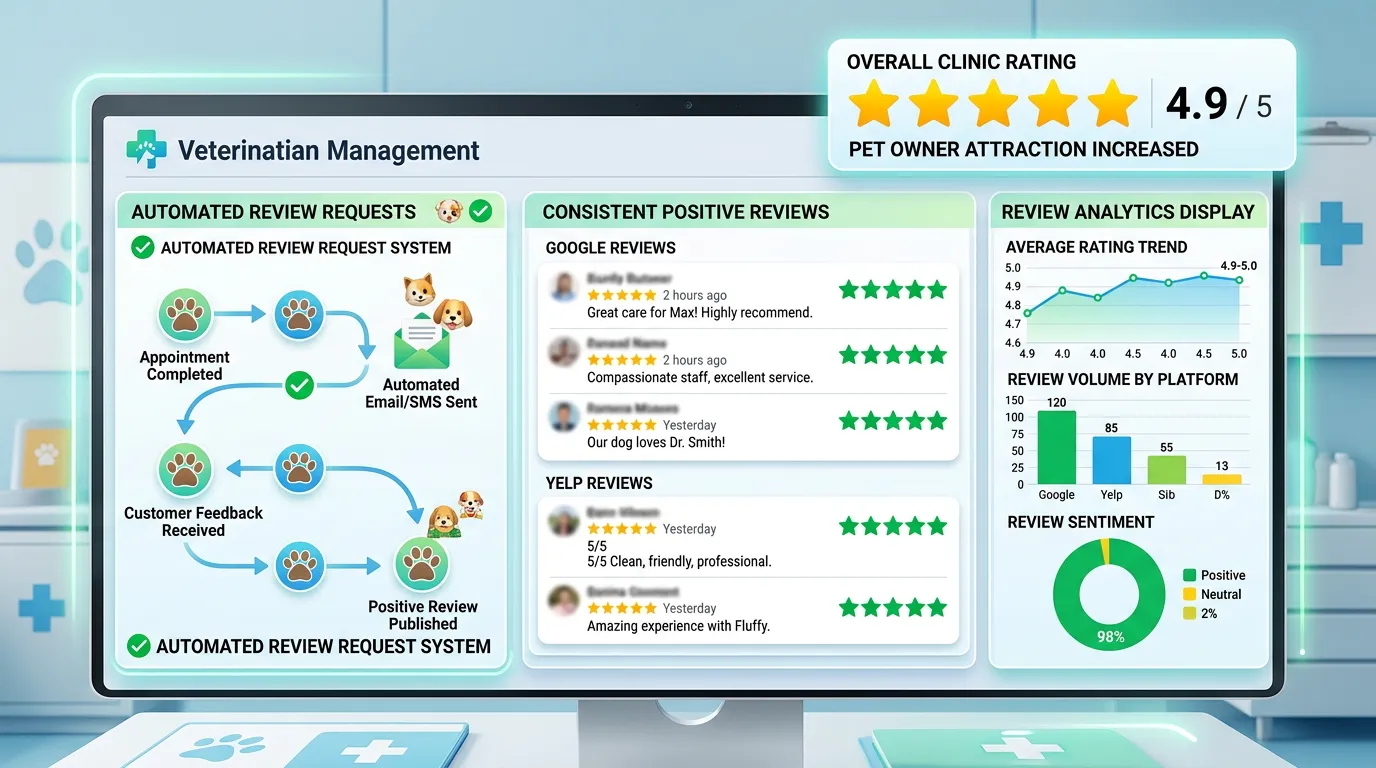
- A review system for a practice that deals with grief
- The reminder system, set up once
- Two questions about what to say online
- Questions
What usually goes wrong
- You cannot hire enough veterinarians or technicians to open more appointment slots
- A grieving or angry client leaves a one star review that no reply can undo
- Clients expect posted prices and push back hard on estimates
- Corporate and chain hospitals open nearby with longer hours and heavy advertising
- Emergency overflow arrives when your schedule is already full
- Online pet pharmacies take the prescription and food revenue you used to keep
- No shows and late cancellations waste slots other clients would have taken
What usually makes an owner start looking
- You hire an associate veterinarian and need to fill their schedule
- You buy a practice from a retiring veterinarian and inherit the client list
- You add services such as dentistry, ultrasound, urgent care hours, or surgery days
- A corporate or chain animal hospital opens within a few miles
- You launch wellness plans and need clients to enroll
- You relocate or expand and the new address has no local search history
Which channels actually matter
Not every channel deserves the same weight for veterinary clinics. This is how we would prioritise.
| Channel | Weight | Why |
|---|---|---|
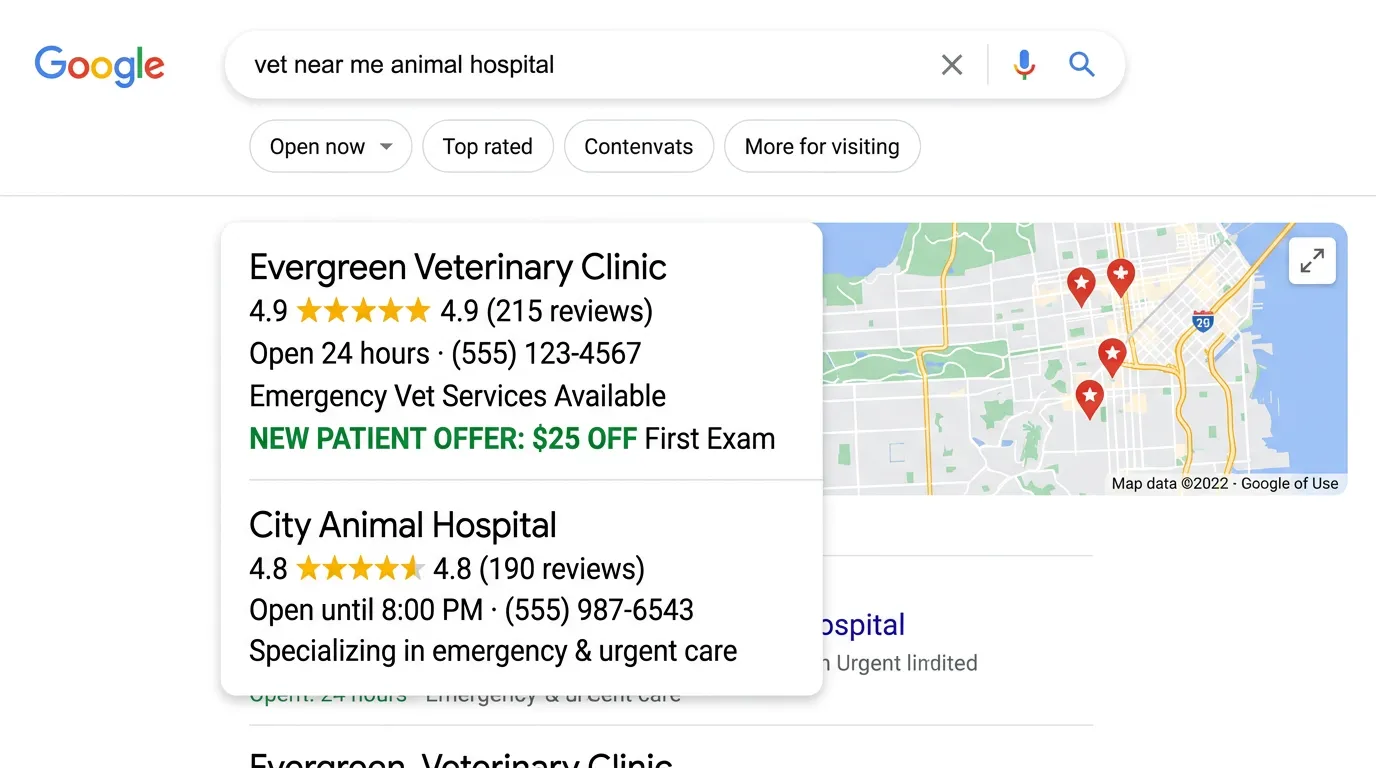
| Local SEO | Primary | Pet owners search for a vet near them and rarely travel far. Map visibility, accurate hours, and clear emergency instructions decide which clinic gets the call. |
| Reputation Management | Primary | Veterinary reviews carry heavy emotion. A protocol for asking happy clients and responding calmly to hard reviews protects a rating that would otherwise swing on a few bad days. |
| Email and Marketing Automation | Primary | Vaccine, parasite prevention, and dental reminders fill wellness appointments automatically, which is the most profitable use of a schedule you cannot easily expand. |
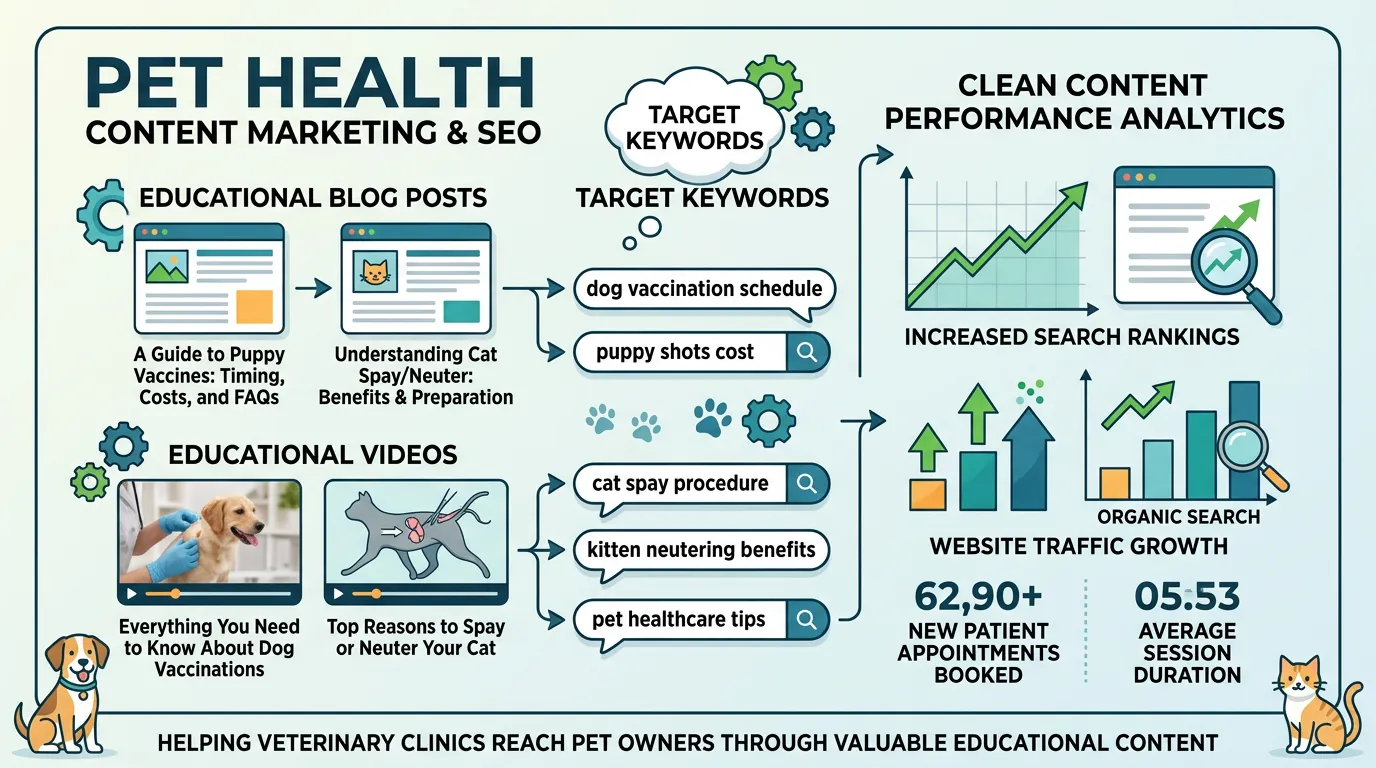
| Content Marketing | Secondary | Pages on foxtails, heat safety, dental disease, and what an emergency actually looks like answer real local questions and bring in owners before the problem gets worse. |
| Social Media Marketing | Supporting | Patient photos and staff introductions build the client bond that keeps people from switching to the chain hospital that just opened with a coupon. |
Seasonality
Summer is the busiest stretch in Southern California. Warm weather brings flea and tick problems, foxtail injuries from dry grass, and heat related visits. It also brings travel health certificates and boarding demand. Fireworks around the Fourth of July cause a spike in anxiety visits and lost pets. Back to school in late August brings separation anxiety cases. December slows for elective surgery while holiday hazard visits rise. The mild climate keeps parasite prevention relevant all year.
What we measure
New client appointments per month
Appointment slot fill rate by day and provider
Average client transaction value
Wellness plan or preventive care enrollment
Reminder compliance rate for vaccines and dentals
Concerns we hear
We are booked three weeks out. More marketing would make it worse.
Then marketing should change the mix, not the volume. Filling slots with wellness and dental work instead of last minute urgent squeeze ins improves both revenue per appointment and the staff's day. We can also use it to promote the days and hours that stay empty.
We got a terrible review from someone who could not afford treatment.
Those are the hardest and the most public. A short, kind response that never discusses the case, states that cost options are always offered, and invites a private conversation is what future readers judge you on. The reply is for them, not for the reviewer.
Clients only care about price now.
Price shows up first when nothing else is visible. Practices that publish what a wellness exam includes, explain why dentistry requires anesthesia, and show the team get far fewer pure price calls than practices whose website is a phone number and an address.
The corporate hospital down the street has a national ad budget.
And rotating doctors. Owners with a senior pet or a chronic case want the same veterinarian each visit. That continuity is your advantage, and it needs to be stated plainly on the site and reflected in the reviews you collect.
Where we would start
The services that move the needle fastest for veterinary clinics.
Reputation Management
Generate reviews on purpose and protect the rating you have.
Reputation ManagementEmail and Marketing Automation
Follow up every time, without anyone remembering to.
Email and Marketing AutomationGoogle Business Profile Optimization
Turn your profile into the strongest lead source you own.
Google Business Profile OptimizationWeb Design and Development
Fast, accessible websites built to turn visits into calls.
Web Design and DevelopmentSocial Media Marketing
Social proof that supports the sale instead of random posting.
Social Media Marketing
Where we serve this industry
Marketing a practice that cannot add appointments
Most independent veterinary practices in Southern California are not short of demand. They are short of veterinarians and technicians. Marketing in that situation is not about volume. It is about which appointments fill the day.
Two clinics with the same schedule can have very different weeks. One is packed with last minute squeeze ins that run late and wear out the staff. The other is booked with dentals, senior wellness workups, and rechecks that start and end on time. The second one earns more and burns out slower.
That mix is something marketing can change. Reminders and content push planned care into the slots you choose. The profile and the website set expectations about what you handle and when, which quietly cuts the calls that were never going to fit.
Which visits to market, and into which gap
Look at last month's schedule and find the holes that repeat. Then aim a specific appointment type at each one.
| The gap | What to fill it with | How you fill it |
|---|---|---|
| Slow midweek mornings | Dental cleanings and surgery days | Recommend at the exam, then text the estimate |
| Open wellness slots | Senior workups and vaccine boosters | Automated due date reminders by species and age |
| A new associate's empty book | Puppy and kitten series, rechecks | A real bio page plus an email to current clients |
| Summer overflow you cannot take | Nothing, on purpose | State your urgent policy on the profile and greeting |
| The quiet weeks after the holidays | Dentals and lapsed client outreach | One January campaign to clients not seen in a year |
The fourth row matters as much as the others. Turning away the wrong calls politely is part of the job.
A review system for a practice that deals with grief
Veterinary reviews carry emotion that most trades never see. The system has to be built before a hard week happens, not after.
Do this
- Ask at the end of a good routine visit, never after a hard one
- Give one person the job of checking reviews every day
- Reply within two days, kindly, and only once
- Keep a written response template the whole team has agreed to
- Answer the good reviews too, briefly, so the page looks alive
Not this
- Do not mention the pet, the diagnosis, or the bill in a public reply
- Do not argue, correct the facts, or quote the medical record
- Do not ask a client to take a review down
- Do not offer anything in exchange for a review
- Do not let a doctor reply in the hour they first read it
The reminder system, set up once
This is the highest return work in a veterinary practice and it is mostly a weekend of setup. Build these, then let them run.
Vaccine reminders by species and age
Three touches: 30 days out, due, and 30 days late.
Dental recommendations made at the exam
The estimate should follow by text the same day.
Parasite prevention refill reminders
This climate makes it a year round conversation.
Senior bloodwork triggered by age
By a date in the system, not by memory.
Post surgical recheck confirmations
Fewer missed rechecks means fewer bad reviews.
Lapsed client outreach at fourteen months
Late enough to be real, early enough to recover.
Text first, email as the backup
Ask for the mobile number at every check in.
Two questions about what to say online
Should our website say we are not an emergency hospital?
Do we need a page for every species we see?